
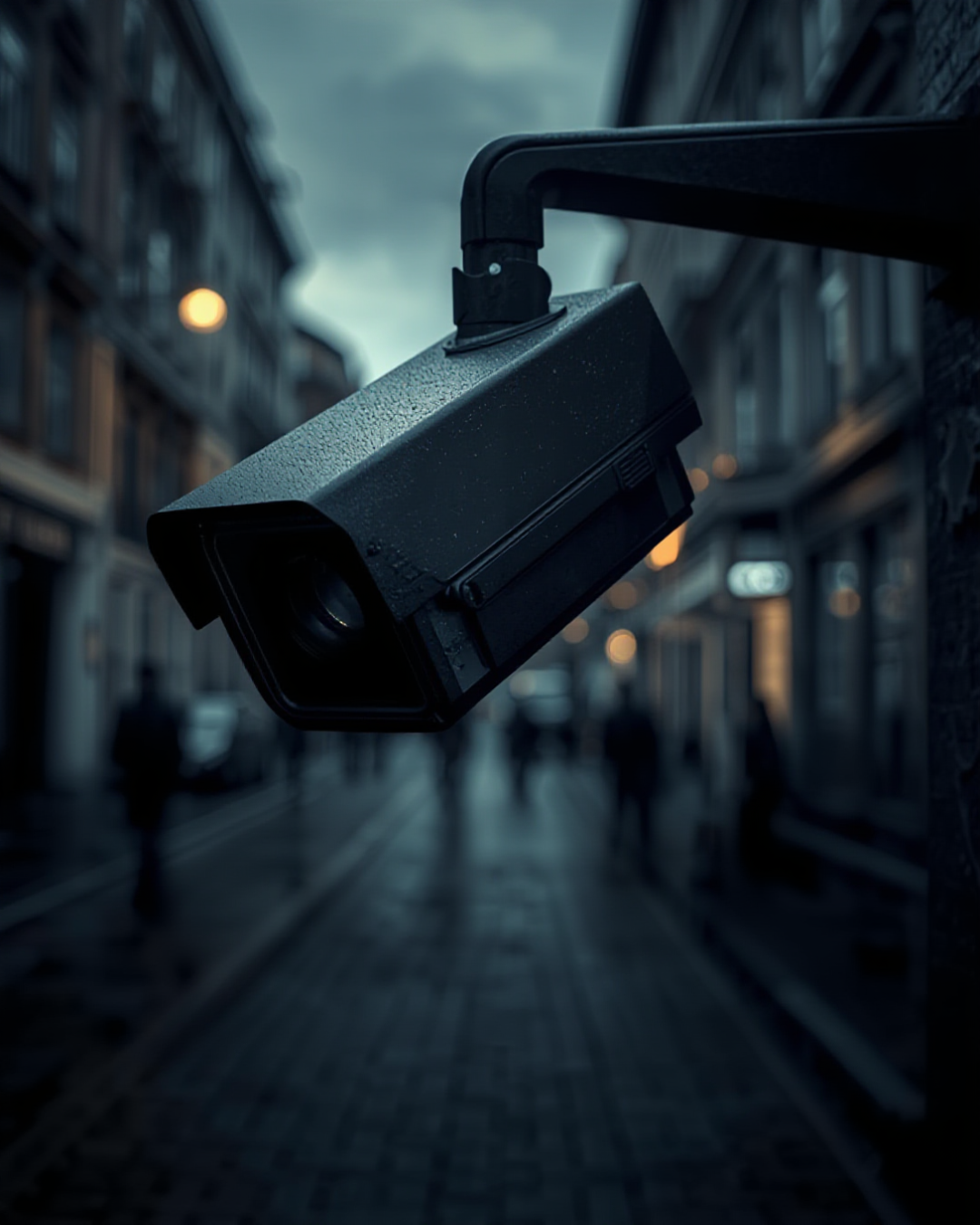
Surveillance is everywhere…greenlight cameras, facial recognition, license plate readers, video doorbells, personal security cameras, and every smart device equipped with cameras and/or microphones. Whether at home or in public, someone or something is watching and listening. Combining these technologies, police could theoretically (and actually) map a person’s daily movements throughout the City. Civil rights and privacy advocates do what they can to reduce surveillance and the potential harm from its use, but the genie is out of the bottle, and there’s no putting her back in.
If surveillance is here to stay, why can’t we at least leverage it to increase transparency and accountability for the protection of civil rights? Specifically, we’re referring to police body worn cameras. Detroit taxpayers foot the bill for these devices, their maintenance, and the footage storage. Not to mention the salaries of those who wear them. And since the City Charter states that “the police forces are in all cases and at all times in strict subordination to civil power,” why shouldn’t we be able to watch what they do on duty just like they can “watch” us?
When a member of our community is killed or harmed by police, it raises serious concerns and questions. And if a picture is worth a thousand words, a video is priceless. Listed here are just some examples of community members killed and/or harmed by police action, after which there was an outcry for the body worn camera footage to be released. For some, partial or redacted footage was released. For others, we’re still waiting for any footage at all.
- Sherman Butler, July 12, 2024
- Lexis Zeidan, May 19, 2024
- Porter Burke, October 2, 2022
- Nakia Wallace, July 10, 2020
- Hakim Littleton, July 10, 2020
- Sheldy Smith, August 1, 2018
- Mark Gaddis, July 21, 2017
Chicago’s Case Portal
Chicago’s Civilian Office of Police Accountability (COPA) has a model of what transparency can look like here in Detroit. COPA uses an open portal to release all content required for public release per Chicago’s City Video Release Policy. An easy-to-use portal provides public access to incidents searchable by date or other meta data. Each incident provides access to related documents (i.e. arrest reports). They also include media such as body worn cameras, other video footage, and 911 call recordings. The videos are hosted on Vimeo, and the direct link to the individual videos and sharing options are available right in the portal.
Detroit deserves a Police Video Release Ordinance which the Coalition for Police Transparency & Accountability (CPTA) edited from a version first drafted by the Board of Police Commissioners (BOPC) in November 2023. You can read the most recent CPTA version here:
Ordinance Overview
This ordinance is intended to strike a balance between competing and sometimes conflicting interests of
- the public in obtaining timely access to video and audio recordings
- individuals who are the subject of the police action
- and investigative agencies
This ordinance encompasses incidents where a DPD member has employed Use of Force or any other action that has or could have reasonably resulted in death or bodily harm, even if no allegation of misconduct is made.
This ordinance applies to:
- all unredacted video and audio recordings relating to the Incident
- and all reports related to the incident.
- out of respect for the family, autopsy reports would be released to the family and only released to the public with the permission of the family
Any Information covered by this ordinance shall be released to the public no more than 7 calendar days from the date and time of the Incident. This allows time for notification to the victim and/or their family.
- Upon written request from a government entity, the City will delay release of Information for a period not to exceed 30 calendar days
- And they must provide reasons supporting the request. The reasons must include 1 or more of the factors listed in MCL 15.243.
- The City shall create and maintain a publicly accessible website or portal similar to Chicago’s, for posting Information covered by this ordinance.
- Such website shall be controlled and managed by the Board of Police Commissioners as the oversight and transparency body.
- In addition, the draft ordinance includes provisions for notification of affected parties, ongoing review of the process, and provisions for redaction where required by law.
Why Detroit? Why an Ordinance?
- The Detroit BOPC was established in 1974; however, Detroit is not currently the benchmark and example of transparency and accountability.
- Other cities, such as Chicago, have progressively adopted mandates for the timely release of videos and supporting documentation related to police use of force incidents.
- Video footage of use of force has been selectively fulfilled, delayed and redacted at the Detroit Police Department’s (DPD) discretion.
- DPD watches the public freely through surveillance technology (i.e. Green Light, License Plate Readers, Facial Recognition); but currently the public can’t freely watch DPD perform the functions our tax dollars pay them to do.
- Public safety is dependent upon, amongst other things, the establishment and maintenance of transparency with respect to the operations of the DPD.
- The people of Detroit have an undeniable, and in some cases paramount interest in being informed in a timely fashion and based on the most accurate information possible, about how their police department conducts its business, especially where the use of force by the police results in the death of, or bodily harm to a civilian.
- Transparency is paramount to the public’s trust in the police department and the judicial system as a whole.
- Ordinances are law in Detroit. This matter is too serious to be entrusted to the broken police department policy draft, recommendation, and approval process.
- The cost to fund the personnel and technology required to administer this ordinance would be recouped by the City in reduced misconduct, increased public trust, and reduced lawsuit payouts ($25M per wrongful conviction).
Ordinance Timeline
- November 2023 – At the direction and approval of the BOPC Policy Committee, then Secretary Victoria Camille (formerly Shah) drafted a proposed ordinance for the City of Detroit modelled after Chicago’s ordinance. The full BOPC voted to support sending the ordinance to City Council for consideration. Then, at a subsequent meeting the Board voted to retract its support.
- 2024 – The CPTA made further revisions to the ordinance.
- October 15, 2024 – Minister Eric Blount presented the Ordinance to City Council during the community meeting. On or about that date, Commissioner Ricardo Moore sent a letter to City Council in support of the Ordinance.
- 2025 – The Detroit Alliance Against Racism and Political Repression (DAARPR) continues to lead the charge on distributing educational flyers, hosting community education sessions, and mobilizing public comments at City Council meetings in support of this ordinance’s adoption.
- March 2025 – The Ordinance is being championed by Councilmember Angela Whitfield-Calloway, however it remains with the City Law Department for edits and approvals. The edits and version being considered have not been publicly released as of September 2025.
It’s time for transparency!
It’s been 2 years! Demand that the Detroit City Council:
- Take up and approve the draft Video Release Ordinance for the City of Detroit as edited and submitted by the Coalition for Police Transparency and Accountability.
- Budget the Board of Police Commissioners sufficiently to secure personnel and technological resources to administer the Police Video Release Ordinance.
Get involved with the Coalition for Police Transparency and Accountability (CPTA) TODAY! Your voice is critical to helping secure the rights of all Detroiters to fairness, real safety, and access to important information about our community.
- Visit https://detroitcpta.org/home/
- Email detroitcpta@gmail.com
- Follow us on FB https://www.facebook.com/DetCoalitionforPoliceTransparencyandAccountability
- Follow us on IG https://www.instagram.com/detroitcpta/

Victoria Camille (Vicki) is a Detroit organizer and advocate for community safety, police accountability, wellness, food sovereignty, engagement, responsibility, and learning. She is the co-founder of the Grand River Community Block Club; a member of the Coalition for Police Transparency and Accountability; and a council member for the Boggs Center. Vicki also builds community with organizations such as Birwood House, Riverwise Magazine, Black Community Food Security Network, Food Justice Fridays, Keep Growing Detroit, and more.
Vicki is a proud mother of 2 adult children, 3 cats, and 3 dogs; loves to garden, camp, read, cook, and participate in community meals and conversations. She holds a bachelor’s degree in business administration, is a certified Wilderness EMT, and studies Natural Medicine

Reverend Blount has been the Minister of Service at Sacred Heart Catholic Church of Detroit for 37 years. He was recently named Treasurer for Sherwood Forest Neighborhood Association. Married to his loving wife for 19 years, he has three daughters, is a new grandfather, and a caregiver for his 95 year old mother.. He loves gardening and fixing up his home in his spare time. He is a steadfast member of the CPTA and a spiritual leader and mentor in the male mentoring program – Men of Isuthu