

The City of Detroit’s new “teen summer safety violence prevention program” intends to hold teens and their parents accountable for young people being out late by enforcing curfews and fines. Mayor Duggan said, “We have had 20 shootings involving juveniles, either victims or shooters, in the last month. Twelve of those shootings, 12 out of 20, occurred in the six-hour slot between 10 pm and 4 am. We are going to do a level of curfew enforcement this city has not seen before. And we are going to enforce the curfew on groups of juveniles who are out after hours” The mayor is taking a criminalizing approach to public safety, thinking that fines, fees, citations and/or mandated parenting classes will be effective in stopping violence; instead of looking at how supporting families and teens could work preventatively to re-engage young people in their communities, which has proven to reduce violent incidents in many other cities across the country.
Do you remember being a teen and the many things you may have been out late doing? I might have been coming home from work, a study session, sports practice, babysitting, a church group, a recreation center, from seeing a friend or family member. What if the bus isn’t running, a car breaks down, or a Lyft doesn’t show? What if a young person must walk home? Wouldn’t it be safer to travel in a group, rather than alone? How can parents be “in control”, especially after teens gain more independence, a bus pass, a license and are often assuming adult responsibilities? Why are we fining young people for being out in public in their own city? Do Detroit teens get to be kids, enjoy downtown, the Riverwalk, and all the assets of our city, too?
Last week, the City Council voted to increase fines from $75 to $250 for a first offense. Fines like this have a larger impact on low-income families, who may not be able to pay them within the timeframe requested by the courts. “Parenting classes” are offered as an alternative to fees, but what if the classes interfere with work schedules? What if a family can’t pay the fine OR complete the classes, what happens then?
As so many of us wrestle with grief, loss, mental health, gun violence in our communities, housing and food insecurity, AND a federal government that is denying resources to people, additional fees can be devastating and even mean loss of income and incarceration for folks who may have accumulated fines, fees and judgments. We also cannot ignore that initiatives like these often result in de facto profiling of Black and Latino neighborhoods, as surveillance initiatives disparately impact Detroiters.
One of the things I’d like us to consider together is ‘what does safety look like?’ How can we work to create neighborhoods that feel safe and allow us to travel safely? How can we work to envision a system that cares for young people by investing in their well-being and supporting families, instead of fining and criminalizing them for the behavior of a handful of outliers.
We can look to Baltimore and Newark, NJ, as examples of divestment from criminalizing youth by re-envisioning violence prevention to include preventative programming; opening recreation centers until 11 pm, providing more funding for programming and youth summer employment opportunities, mentorship, block parties and events for teens to attend, and grants for youth-serving organizations to offer safer options. How can we collaborate to ensure activities and jobs are plentiful, and reliable public transportation is accessible to young people, so that they can safely travel throughout the city, and each can get home at night?
If we all want the best for our youth, how can we show that in the policies and directives we’re setting forth in the City? These are the questions I’d love for us to consider as a community.
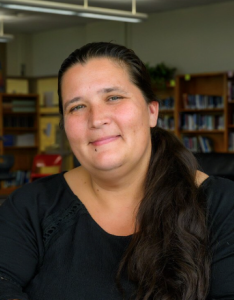
Lauren Fardig-Diop is Program Manager for the Metro Detroit Restorative Justice Network through the Detroit Justice Center. She has been a school-based restorative justice practitioner since 2010, with a focus on training educators and young people on using circles and RJ/TJ practices to interrupt violence at school, at home, and in the community. She believes that we have the tools we need for our collective liberation, and we need to listen to our young people, our returning citizens, and our elders when crafting policy and programming. She is a mama, a community mama, a poet, and a lifelong student.