
Editor’s Note: This review is simultaneously appearing in the Fifth Estate, a Detroit-based, anarchist magazine now in its 60th year of publication. Its online archives contain a history of resistance and renewal in the city during that period which is suppressed by the mainstream media.Riverwise highly recommends subscribing to the Fifth Estate in solidarity. https://www.fifthestate.org/
First self-published in 1970, Hurt Baby Hurt, is a fast-paced and brief yet intimate look into the life of William Walter Scott III, the man credited with inciting the so-called Detroit riots of July 1967. Known to city residents as The Rebellion, the tumultuous five days resulted in 43 deaths, 1,200 injuries, over 7,000 arrests, and hundreds of buildings and homes destroyed. Throughout his memoir, we journey through Scott’s tumultuous young life, fueled by his feelings of disconnection from and disgust for his Blackness due to the insidious racism which plagues the United States. We follow his struggle as he searches for the acceptance and “upward mobility” of “whiteness” before realizing that playing this game has a zero sum.
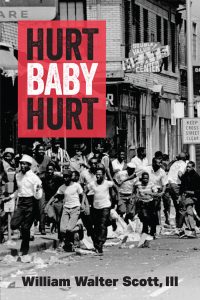
Purchase Hurt Baby Hurt at https://press.umich.edu/Books/H/Hurt-Baby-Hurt
Through his tale of personal discovery, reconnection to his Blackness and eventually rebellion, we are reminded that moments of uprising are rarely the tidy results of methodical planning or precise timelines. Rather, Scott’s memoir reveals the complex internal and external relationships that accompany an individual’s feelings of self-worth and value, rights and responsibilities, identity and roles as they buck against pervasive and ever-shifting ideologies of skin-color, personhood, inclusion and exclusion. His story highlights the ways in which popular uprisings often present more like a fever-dream, a momentary heating up of our minds and bodies during which the ending of the nightmare seems possible, where freedom feels just a protest away, where it could be possible to escape oppression if you just stop obeying these laws we are told are in place to keep us safe, even as they crush dreams, people, communities.
The first time I really learned the story of the Detroit riots was during my junior year at Huron High in Ann Arbor, Mich. in the 1990s, in a course on African American Literature. As we covered the riots, and I recall wondering why I hadn’t learned about them in any of my courses prior to this and why my parents never really spoke of them in depth (my father had been active in the civil rights movement as a student at Tennessee State in the 1960s), except to mention it briefly when we asked about the what had happened to Detroit.
We talked often of white flight, but never fully what had caused it or which fully honored and justified the riots as a symbol of politically valid resistance. It felt disorienting to learn a new perspective of such a major part of the story of Black rebellion and American history in a class taught by a white woman and which my white guidance counselor had advised me not to take because, and I quote “it’s a joke class.”
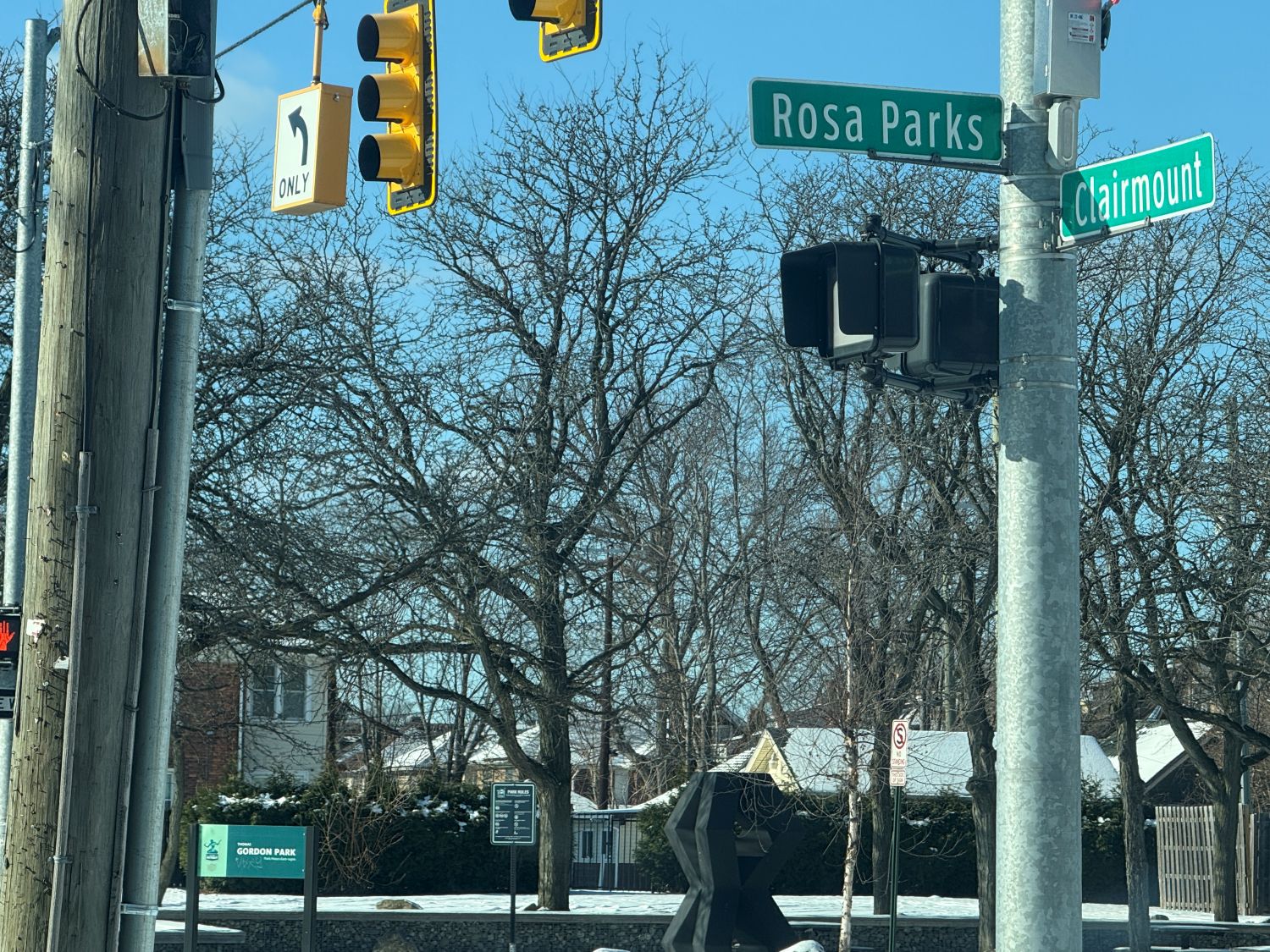
Currently, in my early 40s, I have lived in Detroit for the past eight years. My house is off 12th Street (renamed Rosa Parks Blvd. after the civil rights icon) next to Clairmount Street, the corner where the 1967 rebellion began and where William Scott played a key role in its origin. Now surrounded by abandoned homes and grassy expanses, the hidden legacy of this area links me to the past, present and future in quiet yet powerful ways. As the neighborhood becomes a more so-called desirable place to live, gentrification and new builds regularly crop up among the burnt-out shells of former grand homes and vacant lots. This corner continues to tell an undeniable tale of resistance, resilience, retribution, and repression.
After learning of Scott’s move to Ann Arbor after the rebellion, it is significant to think of our reversed trajectories. Nearly 60 years earlier, he made the exact opposite choice I did. He fled Detroit to save himself from himself and his anger at the city. In his memoir he writes, “One day about four weeks later [after being wrongfully incarcerated following the uprising], after just sitting around rotting inside, I decided to leave Detroit and start all over again…to forget about the bitterness and pain. I wanted to go some place where no one knew me or reminded me of what I had left behind.”
As a somewhat new Detroit resident, I am perhaps a gentrifier in some twisted sense of fate, but I am also a Black woman whose best chance was to leave her increasingly unaffordable and unwelcoming hometown of Ann Arbor and move to the city. In the search for belonging, one son left this corner; one daughter found her way to it.
In parsing through what it means to have incited a rebellion, Scott writes of the moment when he throws a bottle at a cop raiding his father’s after-hours drinking spot (a blind pig in the city parlance) and sparks the ensuing uprising. His sense of unease at creating mayhem while also feeling liberated lays clear the high stakes and fears of engaging in acts which fight back against an unjust system using means that aren’t considered valid in mainstream narratives.
After someone praises him for starting the chaos that led to the burning of the city, he says, “Then lightning struck, hurling me back into a world of cold reality resulting from an honest approval…I got sick to my stomach, but soon got over that feeling because I knew it was out of anger toward those things a human being should battle against that I did what I’d done. All right. Maybe most people were just out for the looting alone and they didn’t all have to agree with my interpretation of why one should or should not riot, but the rioters and looters did have one common interest: lack of respect for the law, the law that had abused them and their right to live.”
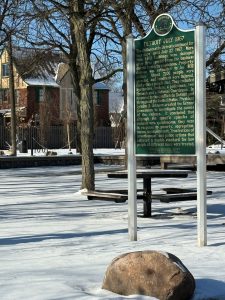
Plaque located at Gordon Park at the corner of Clairmount and Rosa Parks commemorating the historic location where the Detroit rebellions of 1967 began.
One of the reasons we often only hear whispers in Detroit of “the riots,” or speak of them as a veiled threat to once again “burn it down” when confronted with yet another instance of blatant and terrorizing police violence, or to explain to visitors why there are so many vacant lots around the city, is because of the conflicting experience that comes with recognizing rebellion as a real thing with real consequences. Lives are lost, communities are torn asunder, and the reaction of those in power may be an outsized, brutal punishment. It may not work out the way you thought, even if its echoes will reach farther into the future then you could have ever imagined. There are no guarantees in fighting for liberation.
A powerful and poetically beautiful piece of writing, Scott’s memoir gives revolutionary food for thought in these dark times. What makes someone leave or feel like an outsider? What pulls them in and embraces them? What makes them stand up and fight? What makes them walk away in surrender to begin anew? What does it mean when during the nearly 60 years in between a pivotal event in social justice memory someplace considered desirable turns into a danger and the other desirable when it was once considered a danger? How do we affirm our right to humanity in contexts which won’t fundamentally interact with their denial that we ever had that right in the first place? How do we find breathing room to grow under conditions which tell us we should be grateful for the mess we’ve been handed and work hard to clean it up, even as we are inundated (both literally and figuratively) with more and more pollution. How do you make sense of the dueling narratives that tell you if you just play nice, you’ll get ahead, when all around you are bullies threatening your safety? How do we reconcile the notion of home and belonging when we are continuously denied its stability because we really aren’t supposed to be here in the first place or are continually cast as guests even in the places we are born? How do you find consensus when the ones who lead us here don’t want to share and getting too comfortable puts you in their crosshairs?
These are the kinds of questions undergird Scott’s memoir. They lay bare the real human pain and trauma and messiness and unsettled existence that accompanies living in a racial and gendered and ableist capitalist state. One which refuses to acknowledge the resounding violence of its long-entrenched reliance upon a largely tacit yet distinctly felt system of apartheid. One which paradoxically keeps us docile as it keeps us angry, keeps us on the edge of chaos even as we go about pretending this is all normal and everything is fine.
Scott’s story is one that reminds us exactly of our messy humanity. It reminds us that the real leaders and change-makers and the most significant leaps in our social evolution can come from the unlikeliest of people in what are seemingly the unlikeliest of places at the unlikeliest of times… like a former ward of the state defending his neighborhood on a random summer night at an illegal “juke joint” on the West side of Detroit.