
A recent executive order targeting exhibits deemed “divisive” or “race-centered” has placed institutions like the Smithsonian’s National Museum of African American History and Culture under pressure—raising urgent questions about how history is told and who gets to shape it.
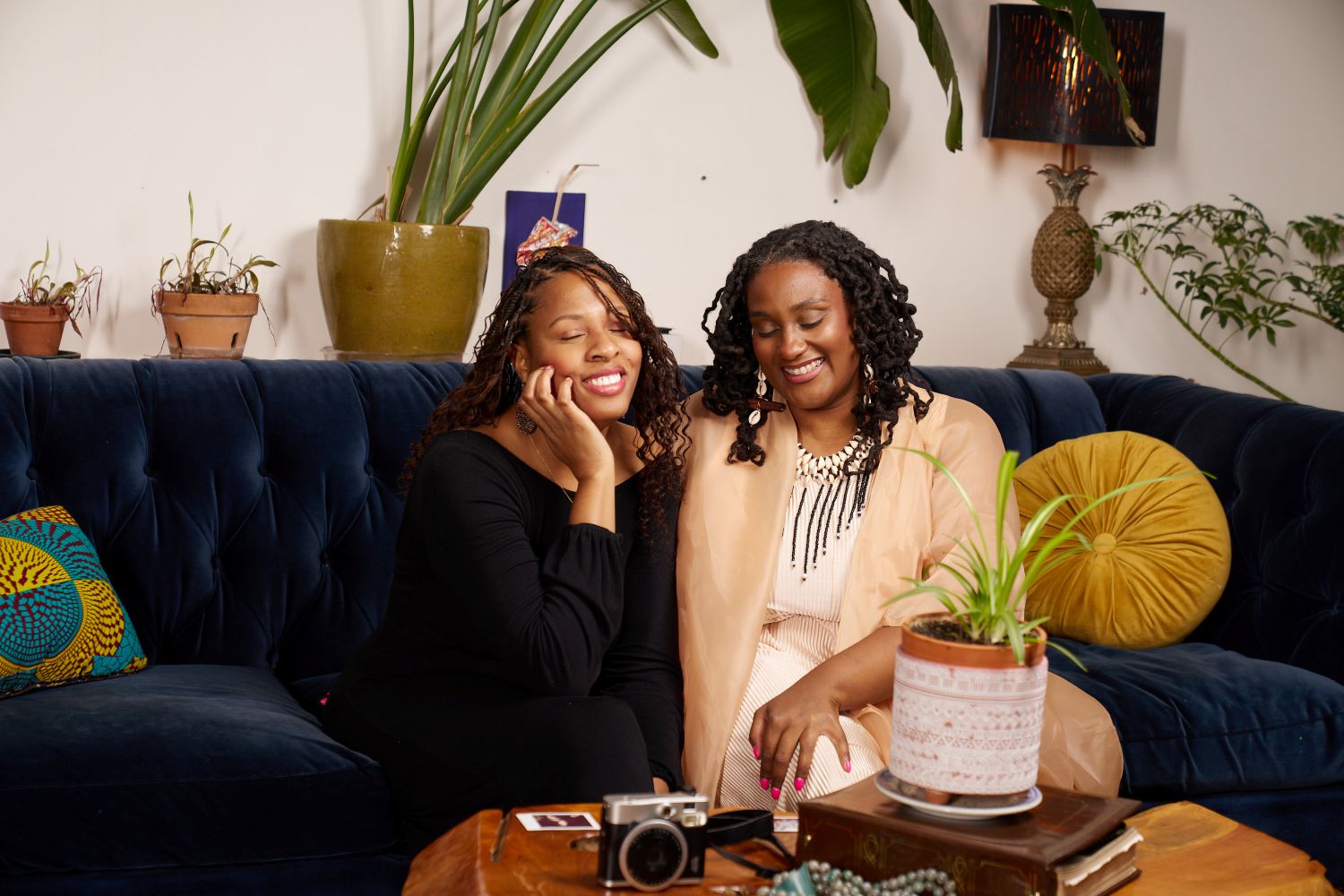
In this context, Detroit filmmakers Cornetta Lane Smith and Ifayomí Christine reflect on the role of the storyteller as a keeper of memory. Their conversation explores storytelling as a practice of ritual, preservation, and resistance.
Our conversation starts with a question that Grace Lee Boggs often asked “What time is it on the clock of the world?” How does this moment shape how you understand your role as a storyteller right now?
IFAYOMI: As we look out upon this moment, locating ourselves in the long history of the road toward liberation it becomes clear that we must decide what to do with the time we have been given. The time spent dreaming of new liberatory ways of being has given us frameworks that have prepared us for the unraveling of this system, and now we’re called to disrupt what continues to try to exploit, terrorize and erase us. The storyteller’s role in this moment is sacred and urgent. We must bear witness to and hold truth before it’s rewritten in the service of power. We must protect our identities, cultures and collective memory so that we are who defines the story of what is true and what we believe is possible. A society collapsing on itself becomes an opening for the imagination, an invitation for storytellers to find one another, build together and dream in the face of erasure.
CORNETTA: Separate from the chaos of this administration, I’m noticing something communal–more people are searching for community. That search requires us to think about what being in community actually asks of us. There’s a saying I’ve been sitting with: everyone wants a village, but not everyone knows how to be a villager. Being a villager is inconvenient. You might be called in the middle of the night, asked to watch someone’s kids, or simply carry a little extra in case someone needs it. And in that village, everyone has a role. The role of the storyteller, then, is to keep and protect the stories of the village. Storytelling is a record of who the villagers are and where they come from.
Ifayomí is right. This work of a storyteller is urgent and sacred. But it’s also practical. It shapes how we show up for one another right now.
Q: Your recent films encourage storytelling as a practice. Can you describe your work and the kind of action or reflection you hope it provokes?
IFAYOMI: Having experienced and looked out on the world experiencing so much grief, I began to dive into the practice of mantra to build my capacity to exist, hence the title, which became a grounding tool. It was also pertinent that this existence was alongside community and utilizing the cultural and ancestral traditions that had felt like they were being lost with each loss I experienced. ‘Until It Feels Like Worship’ became a documentation of my journey through grief, reclaiming the stories and traditions that have shaped me, and uplifting the way that memory keeping as an ancestral practice transforms and connects as stories are shared.
Continue to be curious. Find your community and ask questions about who they are or who they want to be, talk to an elder and record their voices, ask vulnerable and empathetic questions, record a voice note of a conversation that is inspiring you or needs to be uplifted, create a zine that shares the record of your community’s truths. Start even smaller, write affirmations or create an intentional group chat to share with friends.
CORNETTA: My grandmother left rural Tennessee and migrated to Detroit in the 1950s. By the time I became curious about her life, she had suffered a stroke and eventually passed. I went on a journey to learn more about her: searching through census records, visiting her hometown, and collecting facts. But facts alone couldn’t bring me closer to her. So I prepared her favorite meal and invited my family to share stories. Together, we began to piece together a fuller picture of who she was. In that process, I realized I had flattened her life into a story of suffering. That was a disservice to her and to me. I created Recipes of Resistance to encourage people to gather, share stories and resist single narratives. My grandmother held multitudes; remembering her fully is how I keep her and the village she built alive.
Q: How does your creative process itself resist erasure? What impact do you hope your work has?
IFAYOMI: My ethos as a storyteller has always been to commit to the visibility of us existing at the margins and reverently so. That means that I first have to listen, and it is something I do by spending time in community, understanding whose story isn’t being uplifted and becoming curious. Centering these stories ensures they’re included in the collective archive and that a grander picture is told. My visual language often reflects the migratory and spiritual traditions of the African diaspora and because Detroit is so culturally and spiritually rich there is a natural reverence that occurs visually, especially with us being surrounded by water, a sacred and indigenous memory keeper itself. I hope to continue to widen the scope of how we see and honor one another and how storytelling and memory keeping keep us and our traditions alive, countering violence that seeks to destroy and rewrite our stories.
CORNETTA: I do not create in isolation. I invite people into my process. I believe storytelling should be a shared practice because the more people who can hold stories with us, the more we resist erasure.
I hope my work inspires people to practice intergenerational storytelling because that’s how we carry wisdom while being open to what the next generation can imagine for us.
Q: How does place shape the way you remember and tell stories? What does working in and from Detroit make possible in your work that might not be possible elsewhere?
IFAYOMI: Because Detroit is a storyteller all its own, all I have to do is listen. The narratives live in the land, in the architecture and the people. Creating from Detroit means I am creating alongside the people who are shaping the future here and that there must be care, accountability and a reflection of what community wants for themselves. Detroit also makes experimentation possible. In a city that has been written off and rebuilt more than once, people are constantly prototyping new ways of living that is cooperative, cultural, sovereign.
CORNETTA: What I appreciate about the work of filmmaker Ryan Coogler is that he often gives the audience a taste of where he is from. I want to be able to do that. Detroit is a significant place with significant stories. Lots of films about Detroit lose their authenticity because they don’t know the people, the history or the present (referencing Kathryn Bigelow’ s film Detroit about the 1967 rebellion). I am uniquely qualified to tell stories about Detroit because I see how special this place is and my promise is to be regenerative and honest. I am accountable to Detroit and that shapes my storytelling. I don’t want to tell stories about other places because I am Detroit.
Q: What do you believe this moment requires? What is the call to action?
IFAYOMI:This moment requires intentional remembrance. It asks us to practice full-body listening, to meet people and places with open hearts, informed and steady minds, and a willingness to be changed. If we do not tell our own stories, someone else will define us without our context or truth. The Akan principle of Sankofa teaches that we must reach back and retrieve what was left behind in order to move forward. Our traditions, memories and stories are the foundation from which we understand who we are and imagine what is still possible.
When stories are erased or replaced, we begin to see ourselves through a distorted lens. Over time, it becomes harder to trust our identity, our community and our capacity to dream.
The call to action is simple but urgent: become a keeper of the archive. Document and share. Pass down recipes and skills. Let people living the story tell it in their own voices. Record elders. Ask vulnerable questions. Create zines. Start a small group chat to exchange intentionally. Stay curious. Show up present. Protect what should not be lost.
CORNETTA: I agree with Ifayomí. This moment calls us to be curious about the world around us. But it also asks us to turn inward. Because how we show up for our communities is shaped by how well we understand ourselves.
Yes, talk to your elders, record the stories, build your archive. But also take the time to understand your place within your community. Because when you know who you are, you don’t just participate in the village, you strengthen it.
Ifayomí Christine is a filmmaker and interdisciplinary artist whose work explores ritual and collective memory as tools for cultural preservation and healing within Black communities. Working primarily in documentary and docu-narrative forms, she uses observational and experimental cinematography to render the mundane as sacred, believing that through the storyteller, memory-keeping becomes a form of wellness—political, intimate, and integral to survival.
Her film ‘Until It Feels Like Worship’ is a visual prayer set against Black Detroit and Southern matrilineal memory following fayomí’s journey through generational grief as she searches for connection to pieces of herself and her maternal lineage that have been fractured or forgotten, exploring how we move through grief toward healing with food as memory, movement as ritual, and the nourishment we offer and receive from community. The film witnesses what emerges when we reach for what feels just beyond our grasp, and what it means to move forward holding both grief and reverence.
Cornetta Lane-Smith is a Detroit-based filmmaker and artful gatherer whose work centers community storytelling. She produced her debut film, Pedaler (2017), which premiered at the Freep Film Festival and documented the organizing behind Detroit’s Pedal to Porch event, capturing neighbors sharing memories from their front porches. She is the founder of Studio 8278, the creative home for her storytelling practice. Cornetta is also the writer and executive producer of Recipes of Resistance, a docu-series that uses food and conversation to resist flattening people into single narratives and instead honor human complexity.